📰 Latest News Updates
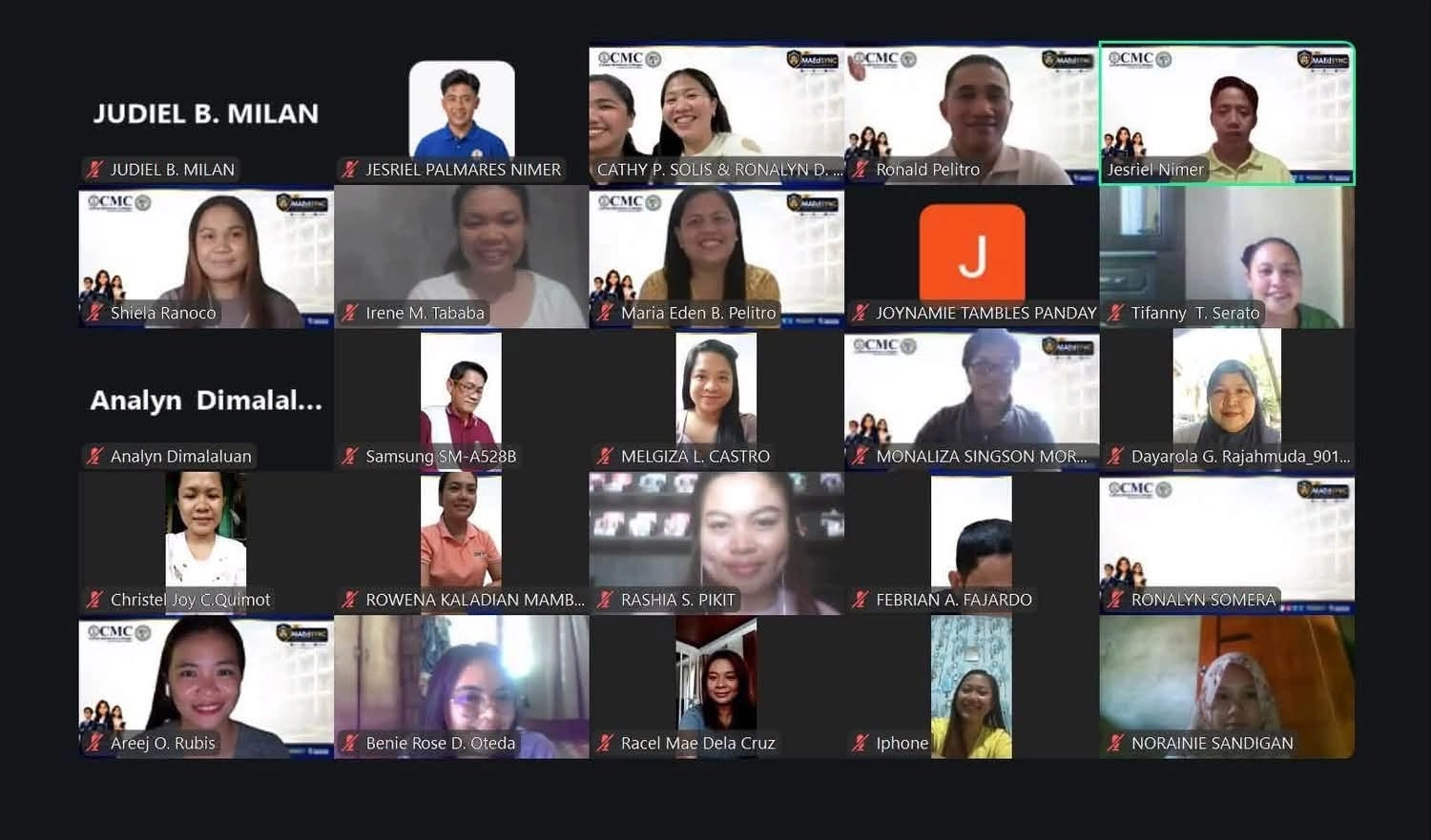
MAEdSync 2026 Turns Graduate Learning into Leadership
The deeper
test of educational leadership is not how much a leader knows, but how wisely
that knowledge is translated into decisions that protect learners, confront
inequities, and move schools forward.
On August 9,
2026, first-year Master of Arts in Education major in Educational
Administration students of Central Mindanao Colleges transformed graduate
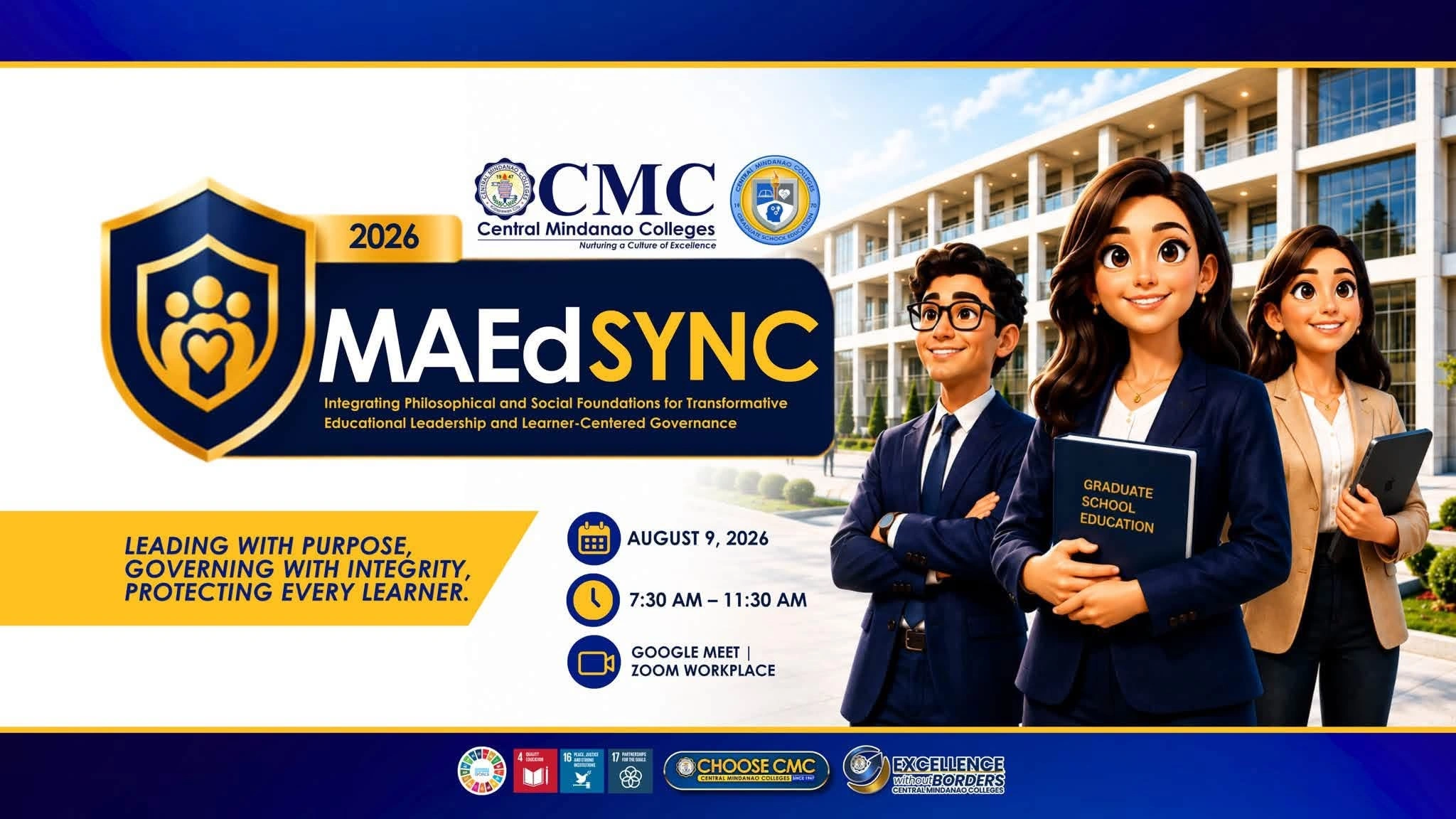
learning into professional engagement through MAEdSync 2026: Integrating
Philosophical and Social Foundations for Transformative Educational Leadership
and Learner-Centered Governance, conducted via Zoom. Guided by the theme
“Leading with Purpose, Governing with Integrity, Protecting Every Learner,” the
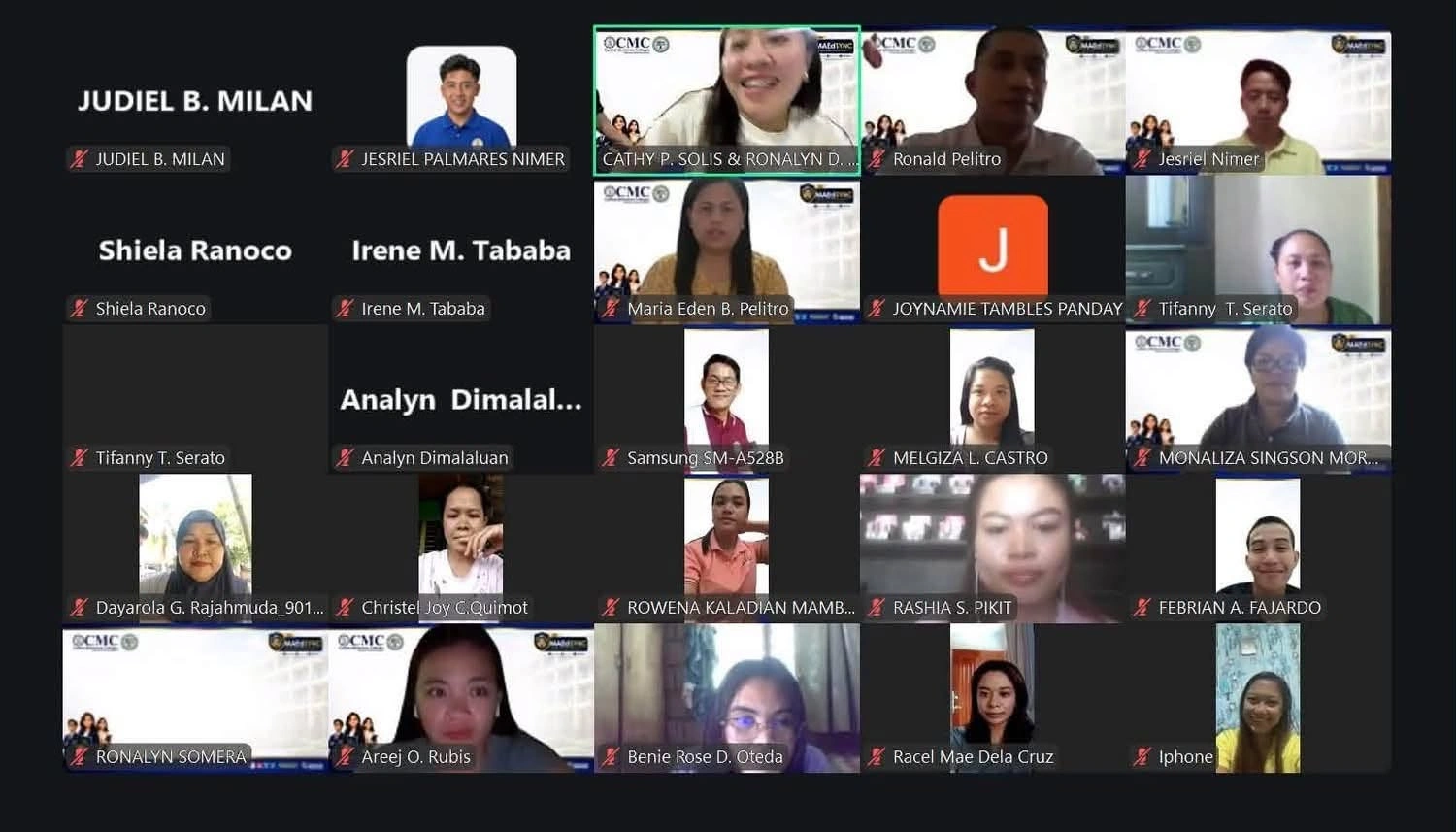
initiative brought together students, teachers, school heads, and education
stakeholders to examine contemporary challenges in school leadership. Rather
than treating philosophy and sociology as concepts confined to graduate
coursework, MAEdSync positioned them as lenses for understanding how leadership
decisions shape learners, institutions, and communities.
Consequently,
three interconnected leadership challenges framed the academic exchange. Ms.
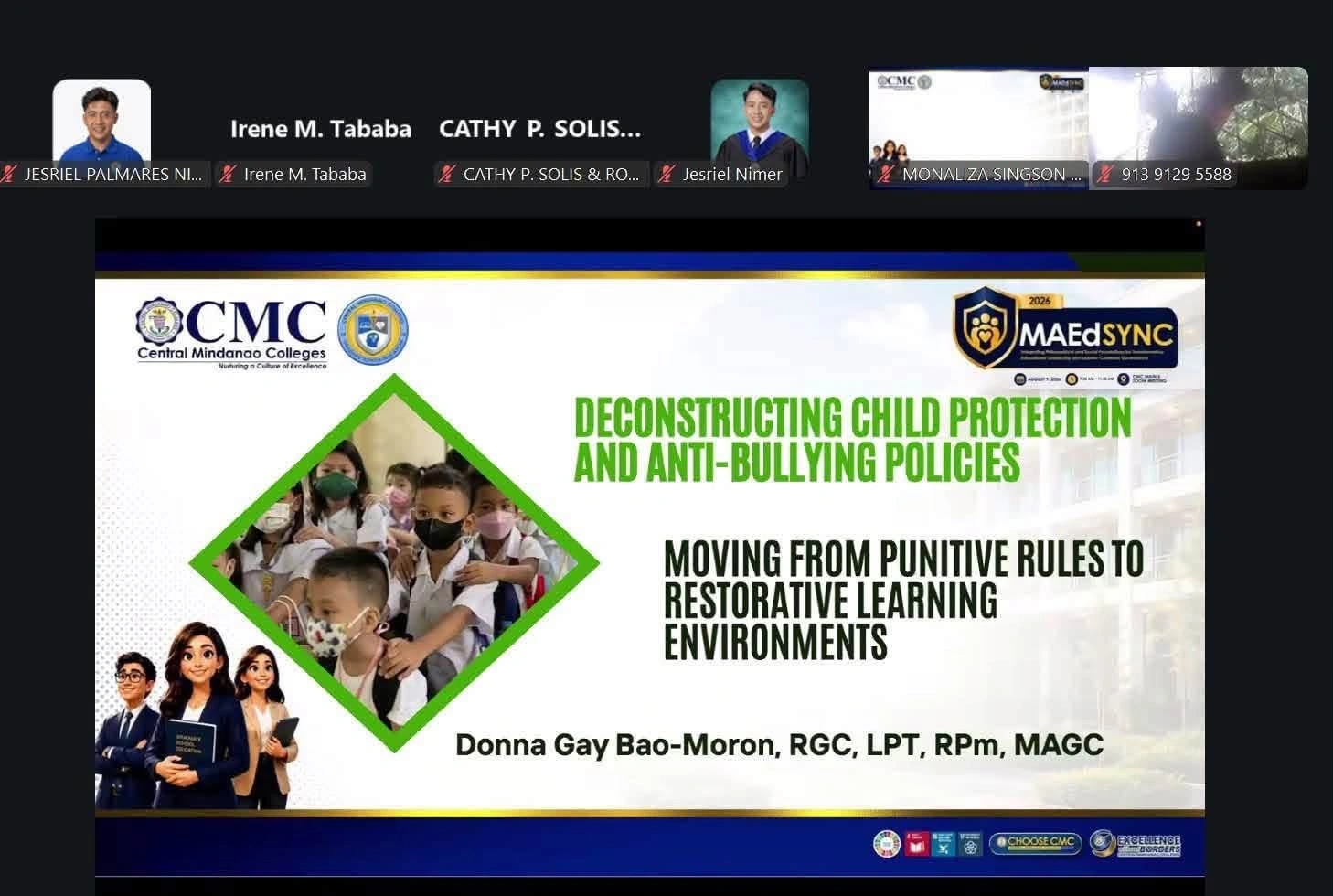
Donna Gay B. Moron, Guidance Counselor III, examined child protection and
anti-bullying policies through restorative approaches that balance
accountability with dignity and positive relationships. Mr. Ronald Arenga
Pelito, Education Program Specialist of SDO Tacurong, explored digital
transformation and artificial intelligence, emphasizing the need to balance
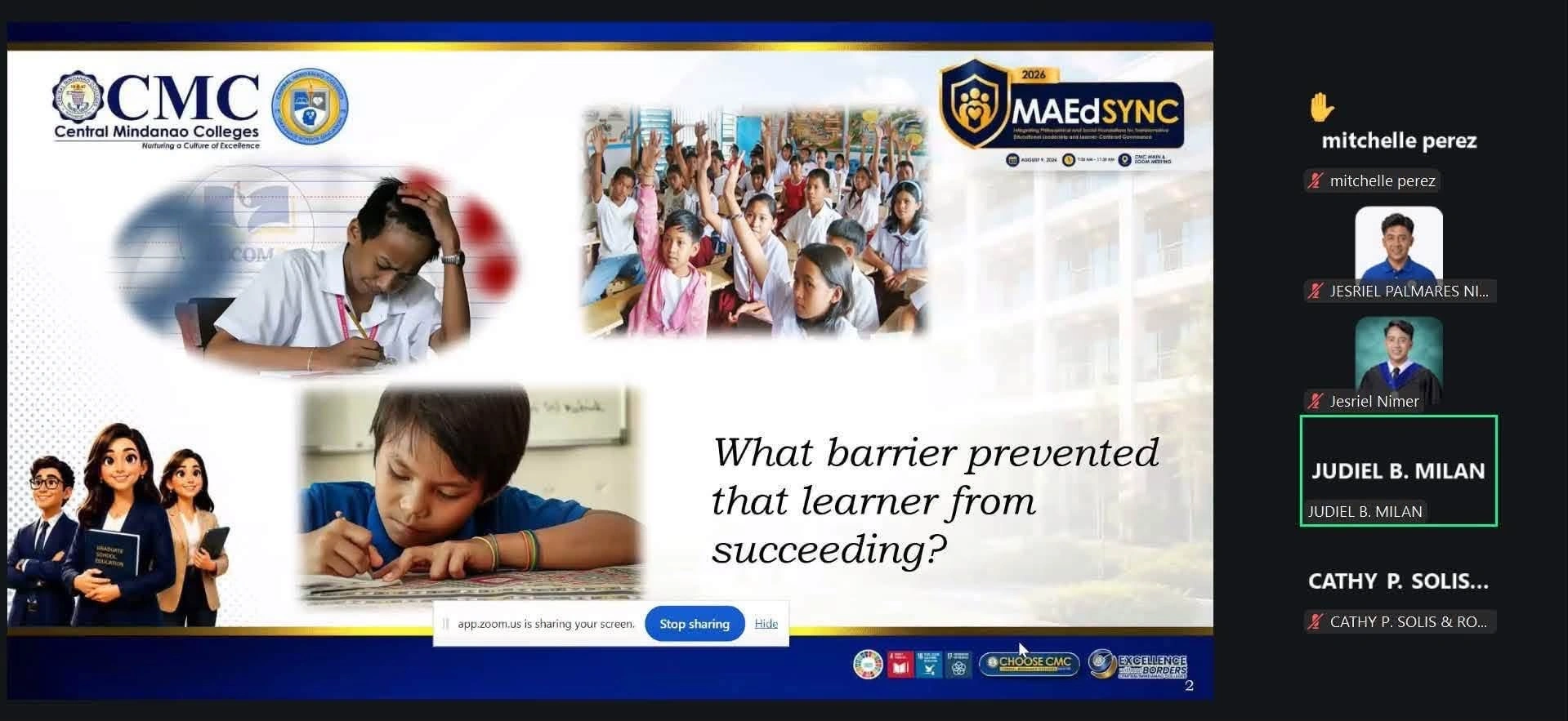
technological efficiency with humanistic pedagogy. Meanwhile, Mr. Judiel B.
Milan addressed equity, cultural capital, and learner diversity within the
Revised K-12 Curriculum, foregrounding the responsibility of educational
leaders to recognize barriers created by differences in culture, opportunity,
background, and learning needs.
More
importantly, MAEdSync became an exercise in leadership itself. For the graduate
students who initiated the webinar, organizing an academic platform required
collaboration, professional communication, decision-making, and program
management.
Dr. Gemma N.
Kintanar emphasized that educational leadership becomes meaningful when it is
grounded in sound principles, guided by integrity, and responsive to the needs
of every learner. In this sense, student success was demonstrated not only
through knowledge acquired, but through the ability to mobilize knowledge,
convene professional dialogue, and connect educational theory with authentic
institutional concerns.
Aligned with
SDG 4: Quality Education, SDG 10: Reduced Inequalities, SDG 16: Peace, Justice
and Strong Institutions, and SDG 17: Partnerships for the Goals, MAEdSync
reflects a broader vision of graduate education: to form leaders whose
scholarship informs judgment and whose judgment improves the lives of learners.
At CMC,
transformational leadership begins when graduate students move beyond
understanding schools as they are and develop the competence, courage, and
integrity to help shape what schools can become.
Learn Deeply. Lead Wisely. Transform Purposefully.
Publishers: News and Updates